
There’s a particular kind of heartbreak that comes with sitting in a dental chair, hopeful, only to hear the words: “I’m sorry – you just don’t have enough bone for implants.” For so many people across Ann Arbor, Ypsilanti, Saline, and the wider Washtenaw County area, that sentence has felt like a door slamming shut. At Comfort Smiles Family Dentistry, we hear those stories often, and we want you to know something important – that door isn’t shut. Not even close. Zygomatic implants, sometimes called cheekbone implants, were practically designed for patients who’ve been turned away, and they’re changing lives right here in our community every single month.

What Exactly Are Zygomatic Implants?
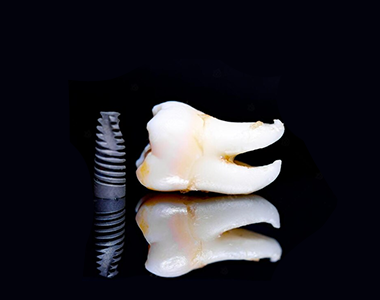
Let me explain this in plain terms. A traditional dental implant is a small titanium post – think of it like a screw – that gets placed directly into your upper or lower jawbone. The jawbone then grows around it, locking it in place. It’s a brilliant system, honestly, but it has one significant weakness: it needs bone to work. If years of tooth loss, gum disease, or long-term denture wear have left your jawbone thin and shallow, a standard implant simply has nothing solid to grip onto.
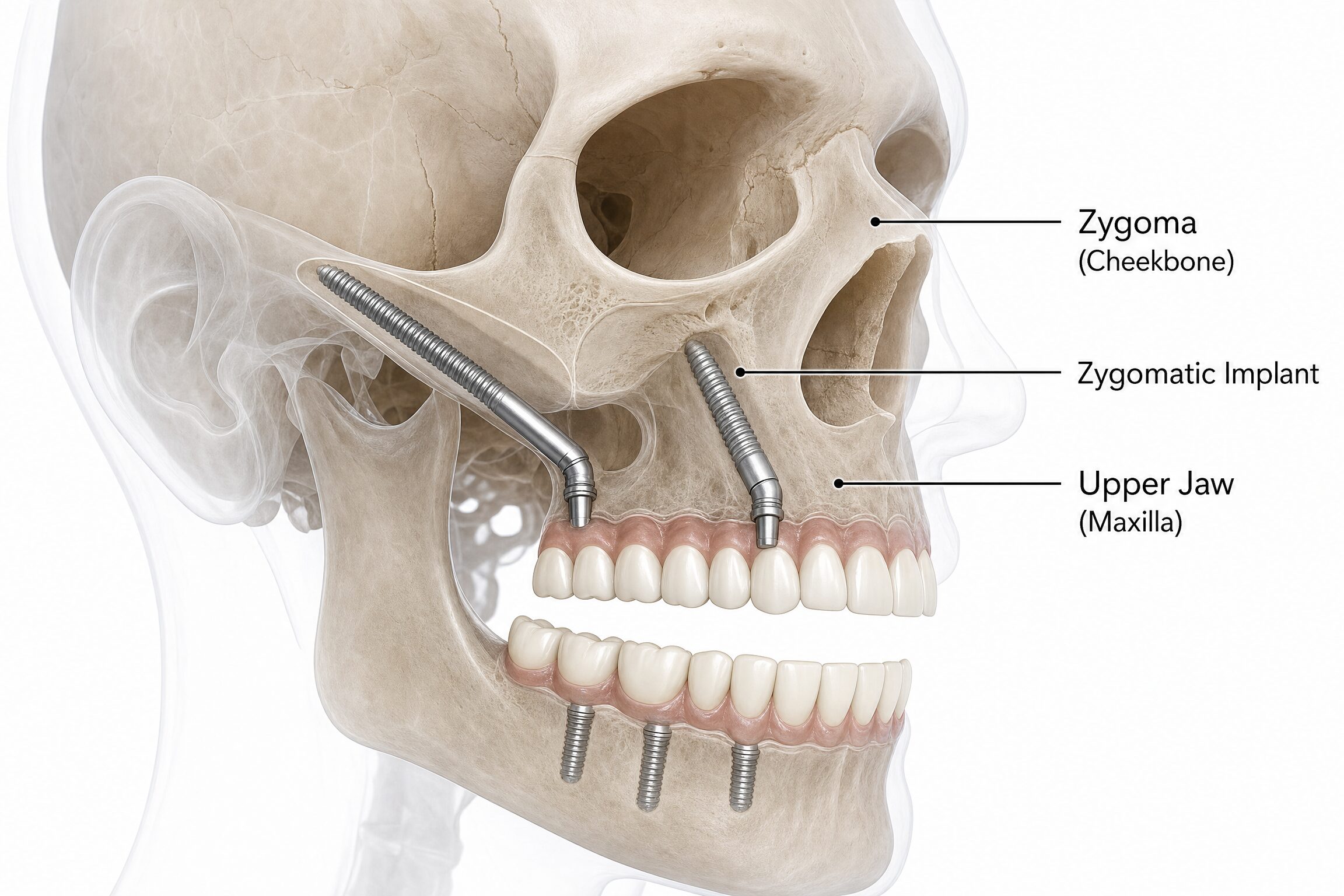
Zygomatic implants solve that problem by going somewhere else entirely. Instead of anchoring into the upper jawbone (the maxilla), they anchor into the zygoma – that’s the dense, sturdy cheekbone that sits just below your eye socket. The implant itself is longer than a traditional one, angling through the upper jaw tissue and embedding deep into the cheekbone. It’s a more complex placement, no question, but the cheekbone is remarkably dense and almost never deteriorates the way the jawbone does. That’s the whole genius of it.
This technique was pioneered in the 1990s by Swedish surgeon Dr. Per-Ingvar Brånemark – the same visionary who essentially gave us modern implantology. For decades, zygomatic implants were considered a last resort, reserved for cancer patients or people with extreme facial defects. Today, with refined surgical techniques and better imaging technology, they’ve become a reliable, well-documented solution for anyone with significant upper jawbone loss. Patients from Canton, Plymouth, Chelsea, and Dexter are discovering this option and wondering why nobody told them about it sooner.
Why Bone Loss Happens in the First Place
- Lack of stimulation from chewing: Your jawbone stays dense because tooth roots constantly stimulate it when you bite and chew. Once a tooth is gone – whether from a tooth extraction or natural loss – that stimulation disappears and the bone begins to shrink, sometimes losing up to 25% of its width in just the first year.
- Wearing traditional dentures for many years: Dentures sit on top of the gum tissue – they don’t stimulate the bone beneath. Over time, the jawbone continues to resorb, which is why long-term denture wearers often notice their face starting to look “sunken” and their dentures becoming looser and looser no matter how much adhesive they use.
- Periodontal (gum) disease: Advanced gum disease is one of the most aggressive destroyers of jawbone. Chronic bacterial infection eats away at the bone supporting your teeth, and by the time the teeth are lost, the bone underneath is already significantly compromised.
- Facial trauma: Accidents, injuries, or prior surgeries – including tumor removal – can leave behind areas of the jaw where bone simply no longer exists in sufficient quantity for standard implant placement.
The Life-Changing Benefits of Zygomatic Implants
Here’s the thing – the benefits of zygomatic implants go well beyond just “being able to get implants when you couldn’t before.” This approach carries some real, practical advantages that even patients who technically qualify for traditional implants sometimes find appealing once they understand the full picture.
No Bone Grafting Required
Traditional implant patients with thin jawbones often face months of bone grafting before the actual implant can even be placed – a process that’s uncomfortable, expensive, and time-consuming. With zygomatic implants, we bypass that entirely. The cheekbone provides all the foundation we need, which means no harvesting bone from elsewhere in your body and no waiting around for graft material to integrate.
Faster Treatment Timeline
When bone grafting is part of the equation, treatment can stretch out to a year or more. Zygomatic implants dramatically compress that timeline. In many cases, the implants are placed and a temporary set of fixed teeth is attached in a single surgical appointment – meaning you can walk out with a functioning smile the same day, not six months from now.
Incredible Stability
The zygoma is one of the densest bones in the human skull – it doesn’t thin out or resorb the way the upper jaw does. When a zygomatic implant is seated deep into that cheekbone, the stability is extraordinary. Patients consistently describe the difference as going from something that felt precarious and wobbly to something that feels completely natural and immovable.
Eat What You Want Again
Years of dentures means years of avoiding hard foods, crunchy vegetables, tough meats – the list of “can’t haves” gets depressingly long. Zygomatic implants restore close to your natural biting force. Patients from Milan, Pittsfield Township, and Superior Township tell us that being able to eat an apple again – or enjoy a steak without anxiety – feels like getting a piece of their life back.
Traditional Implants vs. Zygomatic Implants
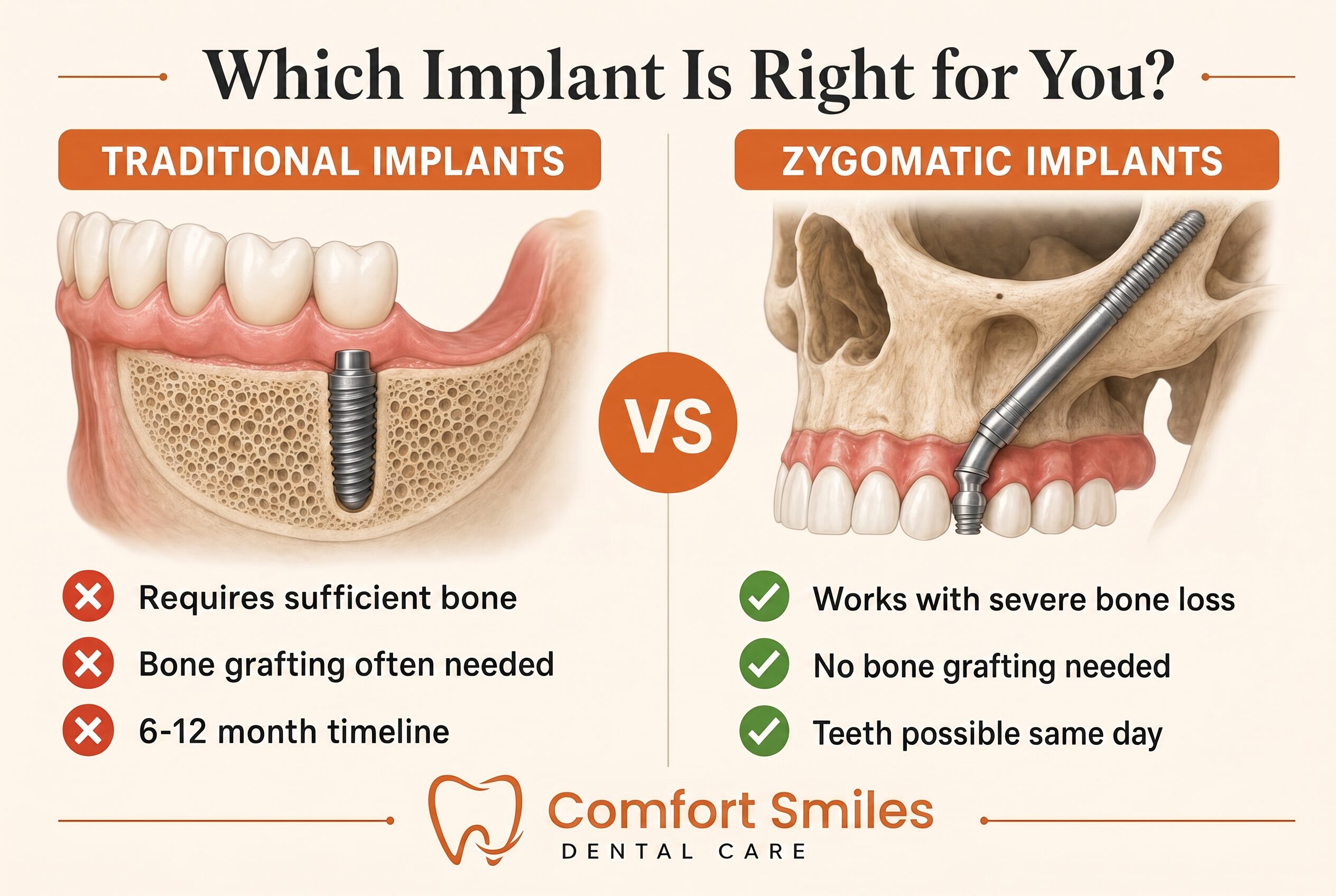
Not sure which option applies to you? This side-by-side comparison lays it out clearly – because understanding the difference is the first step toward making the right decision for your situation.
| Feature | Traditional Implants | Zygomatic Implants |
|---|---|---|
| Where it Anchors | Jawbone (Maxilla or Mandible) | Cheekbone (Zygoma) |
| Bone Requirement | Requires sufficient jawbone density | Ideal for severe jawbone loss |
| Bone Grafting | Often needed if bone is thin | Almost never needed |
| Treatment Time | Can take 6-12 months if grafting is needed | Often placed and loaded in one day |
The Zygomatic Implant Process: What Actually Happens
We won’t sugarcoat it – zygomatic implant surgery is a specialized procedure that requires an experienced, highly trained oral surgeon. But “specialized” doesn’t mean scary. The process is methodical, carefully planned, and performed with your comfort as a genuine priority at every single step.
Step 1: Advanced 3D Imaging
Before anything else, we use cone beam computed tomography (CBCT) scanning to create a precise, three-dimensional map of your facial anatomy – including your cheekbones, sinus cavities, and what remains of your jawbone. This isn’t just a formality; it’s what allows the surgeon to plan the exact angle, depth, and positioning of each implant with millimeter-level precision, long before you ever enter the operating room. Think of it as building the blueprint before breaking ground.
Step 2: Precision Surgical Placement
The surgery itself is performed under IV sedation dentistry or general anesthesia, so you’re completely comfortable – most patients describe the experience as simply going to sleep and waking up with the hard part already done. The surgeon carefully angles the long zygomatic implants through the upper jaw tissue and seats them firmly into the dense cheekbone on each side. In some cases, two zygomatic implants per side (a “quad zygoma” approach) are used alongside standard implants at the front of the mouth for a complete full-arch solution.
Step 3: Attaching the New Teeth
Here’s where things get genuinely exciting. Because the cheekbone provides such immediate, rock-solid stability, a temporary full-arch bridge can often be attached to the implants on the very same day as surgery. You leave our Ann Arbor office with fixed, functional teeth – not a removable denture, not a gap – real teeth you can feel confident about. Several months later, once full osseointegration is confirmed, your permanent prosthetic teeth are crafted and fitted for a lifetime of use.
Been told you can’t get implants because of bone loss? We can help.
Who Is a Good Candidate for Zygomatic Implants?
Honestly, the best candidates are people who’ve already been told “no” by other dental providers – patients with severe upper jaw resorption who would otherwise require multiple bone grafting procedures before traditional implants could even be attempted. If you’ve been wearing full upper dentures for five, ten, or twenty years and you’re exhausted by the slipping, the adhesives, and the dietary restrictions, zygomatic implants for severe bone loss are almost certainly worth exploring.
Good general health is important, as with any surgical procedure. Uncontrolled diabetes, active smoking, and certain medications can affect healing and will be discussed thoroughly during your consultation. But these aren’t automatic disqualifiers – they’re factors we assess together, carefully and honestly, so you have a clear picture of what’s realistic for your specific situation.
We see patients from all across Washtenaw County – from Dexter and Chelsea in the west to Ypsilanti and Milan in the east, from Canton and Plymouth just over the county line, to Pittsfield Township and Superior Township right here in our backyard. If you’ve been quietly wondering whether there’s still a path to permanent teeth for you, there very likely is. The conversation starts with a consultation, and that consultation starts with a phone call or a click.
What About the Cost? Let’s Be Real.
Zygomatic implants are a specialized procedure, and the investment reflects that. We won’t pretend otherwise. But here’s a perspective worth holding onto: when you factor in the cost of years of denture adhesives, relining, and replacement – plus the hidden costs of a restricted diet, diminished confidence, and the emotional weight of feeling like you’re “making do” – the math often shifts more than people expect.
Additionally, for patients who would otherwise need extensive bone grafting before traditional implants, zygomatic implants can actually be the more economical path when all the procedures are tallied up together. We offer flexible dental financing options to make this life-changing treatment accessible, and our team will walk you through every number during your consultation so there are absolutely no surprises.
“I wore dentures for almost fifteen years and went to two different dentists in the Ann Arbor area who both told me I didn’t have enough bone for implants. I’d basically accepted that dentures were just my life. After getting zygomatic implants at Comfort Smiles, I cried in the car on the way home – happy tears – because I finally had real, fixed teeth that didn’t move. I wish I hadn’t waited so long.”
– Sandra M., Saline, MI