Posted on May 15, 2024
Your smile deserves care that goes beyond just brushing. From Ann Arbor to the surrounding communities like Ypsilanti and Saline, understanding dental problems helps you keep your teeth healthy for life.
Honestly, no one wakes up hoping to deal with toothaches or awkward dental visits. But here’s the thing: many common dental problems sneak up on us. You might feel fine now—living your life in Ann Arbor, Dexter, or Chelsea—but without the right knowledge, you’re inviting trouble. Let’s walk through the top five dental issues people face and how a few simple steps can keep you smiling bright across Washtenaw County.
Whether you’re juggling work in Pittsfield Township or enjoying family time in Canton, understanding your dental health is a game-changer. Let me explain why prevention isn’t just a buzzword—it’s your best defense against pain, costly treatments, and lost confidence.

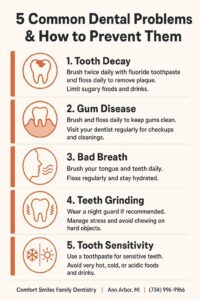
You know what? Tooth decay is sneaky. It’s the most common dental problem for a reason—according to the American Dental Association (ADA), nearly 92% of adults have had cavities by age 65. Here’s the thing: cavities happen when acid-making bacteria throw a party on your tooth enamel, breaking it down little by little.
Imagine your enamel like a shield. When acid from sugars and carbs hang around too long, it wears down that shield, creating holes that turn into cavities. Left unchecked, these can cause pain, sensitivity, and eventually, infections that call for a root canal or dental crown.
How to Keep Cavities at Bay
Gum disease, or periodontitis if we want to get technical, is a bacterial infection that targets your gums and the bones supporting your teeth. It’s a silent menace—often painless until significant damage has been done. The Centers for Disease Control and Prevention (CDC) reports that nearly half of adults over 30 have some form of gum disease.
The early stage, gingivitis, causes red, swollen gums that bleed after brushing. If ignored, it progresses to periodontitis, where gums pull away from teeth, forming pockets that collect plaque and bacteria. This can eventually lead to tooth loss—and nobody wants that.
Your Gum Disease Defense Plan
Bad breath, or halitosis if you want to get fancy, can pop up for tons of reasons. Maybe you skipped flossing, or maybe it’s a sign of gum disease or dry mouth. We’ve all been there—feeling self-conscious during meetings or dates because of a persistent odor.
The good news? Most cases are easily managed with a few tweaks in your routine. And if it’s more serious, we can help pinpoint the cause. There’s nothing like fresh breath to boost your confidence in social settings—from Plymouth to Milan.
Tips to Banish Bad Breath
You might not even realize you’re grinding your teeth—especially if it happens at night. Bruxism, or teeth grinding, can cause headaches, jaw pain, and serious tooth damage. People from Chelsea to Superior Township often don’t catch it until their teeth start chipping or they wake up sore.
Stress and lifestyle habits like caffeine or alcohol can crank up the grinding. Luckily, there are practical ways to protect your smile and ease tension.
How to Stop Grinding Before It Starts
Tooth sensitivity—it’s that sudden jolt of discomfort when you sip hot coffee or bite into ice cream. It feels like your teeth are waving a white flag, and honestly, it can be annoying. Sensitivity happens when the protective enamel thins or gum recession exposes roots.
Left untreated, sensitive teeth can worsen and even lead to decay or gum disease. So, paying attention here can save you a lot of hassle.
Steps to Ease Tooth Sensitivity
| Dental Problem | Primary Cause | Key Prevention Steps | Treatment Options |
|---|---|---|---|
| Tooth Decay | Acid-producing bacteria from plaque | Brush with fluoride, floss, limit sugar | Fillings, crowns, root canal |
| Gum Disease | Bacterial infection from plaque buildup | Brush, floss, antimicrobial rinse, quit smoking | Deep cleaning, scaling, sometimes surgery |
| Bad Breath | Bacteria, dry mouth, gum disease | Brush, floss, tongue scraping, hydrate | Dental cleaning, treat underlying causes |
| Teeth Grinding | Stress, lifestyle habits | Stress management, mouthguard, sleep hygiene | Custom nightguards |
| Tooth Sensitivity | Enamel wear, gum recession | Gentle brushing, avoid acid, sensitive toothpaste | Desensitizing treatments, fillings |
“I used to think brushing once a day was enough—but after a visit to Comfort Smiles, my dental exams showed early signs of gum inflammation. Now I’m flossing and rinsing daily and my mouth feels amazing!”
– Sarah M., Ann Arbor resident
“Grinding my teeth at night gave me headaches and morning jaw pain for years. Thanks to the custom mouthguard from Comfort Smiles, my pain is gone and my smile is protected.”
– David L., from Canton
At Comfort Smiles Family Dentistry, we proudly serve patients across Ann Arbor, Ypsilanti, Saline, Canton, Plymouth, Dexter, Chelsea, Milan, Pittsfield Township, Superior Township, and throughout Washtenaw County. No matter where you live, your smile is our priority.
Experts recommend a dental exam and cleaning every six months to catch problems early and keep your mouth healthy.
While enamel can’t regrow, many treatments reduce sensitivity and protect teeth from further damage.
A nightguard is custom-made to protect teeth from grinding during sleep, while mouthguards for sports protect against injuries.
Gingivitis is reversible with proper care. Advanced gum disease can be managed but requires ongoing treatment.
Yes! Dental implants can replace lost teeth and restore your smile. Learn more about dental implants.
Find us here
We're genuinely excited to welcome you to our practice. Here's the thing - filling out a form shouldn't feel like applying for a mortgage. Ours is simple. Tell us your name, how to reach you, which dentist you'd like to see, and anything you want us to know ahead of time. That's it. Our friendly front desk team will get back to you promptly to confirm your appointment and answer any questions.