Posted on December 15, 2023
You know what? Dental emergencies have a funny way of happening at the absolute worst times. Maybe you’re enjoying a Friday night dinner downtown, or perhaps you’re right in the middle of a weekend soccer game. Suddenly, a sharp pain shoots through your jaw, or worse, you hear that dreaded crack.
It’s stressful. It’s scary. But here’s the thing: panicking won’t fix your tooth. Knowing exactly what to do – and who to call – will.
At Comfort Smiles in Ann Arbor, Michigan, we’ve seen it all. From sudden, severe toothaches to knocked-out teeth, our emergency response team understands the urgency and distress these situations cause. Let me explain how we handle dental emergencies, what you should do before you even reach our office, and why having a reliable partner in your corner makes all the difference.
Not every tooth twinge is a five-alarm fire. A mild, dull ache might just mean you need to floss better or schedule a regular check-up. But a true dental emergency involves sudden, severe issues that demand immediate professional attention.
We’re talking about unbearable, throbbing toothaches that keep you awake at night; a tooth that has been completely knocked out (avulsed); badly cracked or fractured teeth, especially if there’s pain or bleeding; swelling in your face or jaw, which could signal a serious infection like an abscess; and significant injuries to the soft tissues of your mouth – lips, gums, and tongue.
If you’re sitting there wondering, “Is this bad enough to call the dentist?” – honestly, just call us. It’s always better to be safe and let our team assess the situation.
If you find yourself in the middle of a dental crisis, the first few minutes are critical. Here is what you need to do before you rush through our doors.
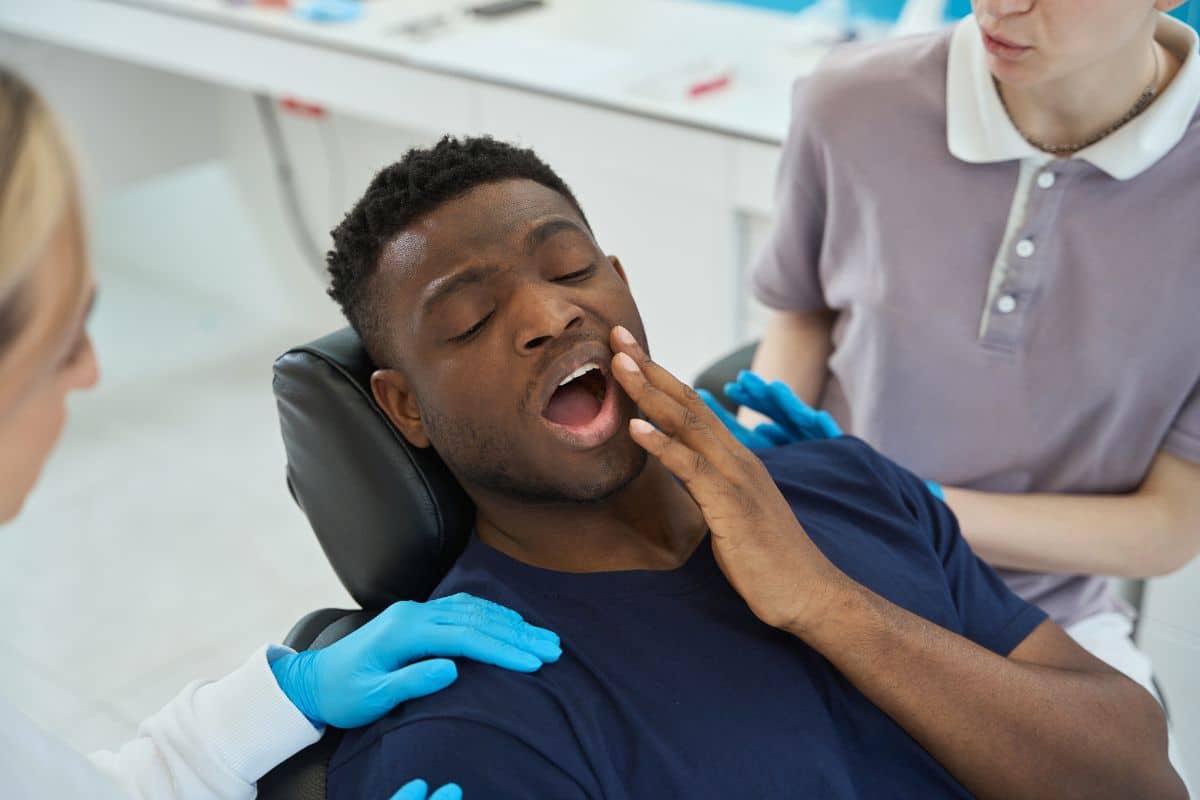
I know – easier said than done. But panicking only spikes your blood pressure and makes the situation feel worse than it is. Take a deep breath. You are going to get through this.
Carefully examine your mouth. Are you bleeding? Is the tooth loose, cracked, or completely gone? Gathering this information helps us prepare for your arrival and provide the right care immediately.
For severe toothaches or swelling, a cold compress on the outside of your cheek works wonders. You can also take over-the-counter pain relievers like ibuprofen or acetaminophen. Never put aspirin directly on your gums or the aching tooth – it will burn your tissue and make things worse.
If your tooth got knocked out, find it immediately. Hold it by the crown – the top part – not the root. Rinse it gently with water without scrubbing. If you can, try to slip it back into the socket. If that’s not possible, drop it into a small container of milk or a tooth preservation product like Save-a-Tooth. Time is of the essence here; getting to us within one hour drastically improves the chances of saving the tooth.
Reach out to our emergency helpline. We will guide you through the next steps and get you in to see our emergency dentist as quickly as possible. Clear, prompt communication is everything in these moments – we’ll tell you exactly what to do.
Let’s look at some numbers, just to put things in perspective. You are definitely not alone in experiencing sudden dental trauma. According to data from the Centers for Disease Control and Prevention, tooth disorders accounted for an annual average of 1.94 million emergency department (ED) visits in the United States between 2020 and 2022. That’s a staggering number of people seeking urgent care for oral pain – and adults aged 25 to 34 make up the largest percentage of these visits.
Here’s the problem, though. Hospital emergency rooms are rarely equipped to provide comprehensive dental care. They can offer pain relief and antibiotics for infections, but they usually can’t perform root canals, extract teeth safely, or repair a broken crown. That is exactly why having a dedicated emergency dentist in Ann Arbor is so crucial. You need specialized care, not just a temporary band-aid.
Honestly, a visit to a dental emergency office costs significantly less than a hospital ER visit for the same issue – and you’ll actually get the treatment you need, not just a prescription and a referral.
At Comfort Smiles, we don’t just react to emergencies; we prepare for them. Our Ann Arbor office is outfitted with state-of-the-art diagnostic and treatment equipment specifically designed to handle urgent cases efficiently. From digital X-rays that give us an immediate picture of what’s happening inside your tooth, to advanced pain management techniques that get you comfortable fast – we’ve built our practice around being ready when you need us most.
From the moment your call comes through, our specialized team springs into action. We provide immediate over-the-phone guidance, offer reassurance, and ensure that when you arrive, a treatment room is ready and waiting. You won’t be sitting in a waiting room in agony – that’s a promise.
When you are in pain, you don’t want to deal with confusing medical jargon or be put on hold. We keep our communication clear, empathetic, and prompt. We’ll explain exactly what we need to do, how we’ll manage your pain, and what the recovery process will look like – in plain English, not dental-speak.
We handle a wide array of urgent dental issues every week. Here is a closer look at how we tackle the most common ones.
Knocked-Out Teeth: We carefully clean the socket and attempt to re-implant and splint the tooth. The sooner you arrive, the better the outcome. A tooth re-implanted within an hour has a very high chance of surviving long-term.
Cracked or Broken Teeth: Depending on the severity, we might use dental bonding, a veneer, or a crown to restore the tooth’s structure and protect the sensitive inner pulp. A hairline crack can become a serious fracture if left untreated, so don’t wait on this one.
Dental Abscesses: These infections are serious – and in rare cases, life-threatening if the infection spreads. We focus on draining the abscess, prescribing antibiotics, and often performing a root canal to save the affected tooth and stop the infection at its source.
Lost Restorations: If a filling or crown falls out, we clean the area and replace the restoration to prevent further decay or damage. In the meantime, a piece of sugarless gum or over-the-counter dental cement can protect the exposed area until you get to us.
Severe Soft Tissue Injuries: Cuts to the lips, gums, or tongue can bleed heavily. We’ll assess the injury, control the bleeding, and stitch the wound if necessary. If the bleeding is severe and won’t stop, go directly to the nearest emergency room.
Fixing the immediate problem is only step one. After your emergency treatment, we don’t just send you on your way and hope for the best. We schedule follow-up appointments to monitor your healing progress and make sure everything is on track. You’ll receive detailed, easy-to-understand aftercare instructions – whether it’s advice on what soft foods to eat, how to keep an extraction site clean, or when to take your prescribed medication.
Think of it this way: the emergency visit stops the bleeding, so to speak. The follow-up visits make sure the wound heals properly. Both are equally important, and we take both seriously.

While you can’t predict every accident, you can certainly tilt the odds in your favor. Maintaining a healthy smile requires a bit of daily diligence – and a few smart habits that are easier than you might think.
Wear a Mouthguard: If you play sports – whether it’s a competitive hockey league or a casual weekend basketball game – wear a custom-fitted mouthguard. It’s the single best way to prevent sports-related dental trauma. Store-bought guards offer some protection, but a custom one from our office fits perfectly and provides far superior coverage.
Watch What You Chew: Ice cubes, popcorn kernels, and hard candies are notorious for cracking teeth. Your enamel is incredibly strong, but it has limits. Treat it with respect.
Don’t Use Your Teeth as Tools: Need to open a stubborn plastic package? Use scissors. Your teeth are meant for chewing food, not tearing open packaging or biting your nails. It sounds obvious, but it’s one of the most common causes of chipped teeth we see.
Stick to Regular Check-ups: Routine visits to Comfort Smiles allow us to spot weak spots, minor decay, or hairline fractures before they escalate into a midnight emergency. Prevention is always cheaper – and less painful – than emergency treatment.
There is a profound sense of relief that comes from knowing exactly who to call when things go wrong. During a dental crisis, Comfort Smiles isn’t just a dental office; we are your reliable partner. We are here to support you, providing expert, compassionate care when you need it most. Our team doesn’t just treat teeth – we treat people who are scared, in pain, and need someone in their corner.
Your emergency is our priority. We understand the urgency, the pain, and the concern. Trust us to restore your comfort, protect your oral health, and get you back to smiling – because that’s exactly what we’re here for.
While we strongly recommend calling us first so we can prepare for your arrival and provide immediate first-aid advice over the phone, we will always do our absolute best to accommodate walk-in emergencies as quickly as possible. A quick call takes 60 seconds and can save you a lot of waiting time.
Rinse your mouth with warm water and gently floss to remove any trapped food. Take an over-the-counter pain reliever like ibuprofen – it helps with both pain and inflammation. Do not apply aspirin directly to your gums. Contact our emergency helpline for further guidance, and we’ll get you in first thing in the morning.
In most cases, yes. The majority of dental insurance plans provide coverage for emergency diagnostic exams, X-rays, and necessary treatments like extractions or root canals. Our team will gladly help you navigate your coverage and assist with the claims process so you’re not left guessing.
A minor chip without pain isn’t a critical emergency, but it still requires prompt attention. A chipped tooth is vulnerable to further damage and decay. Call us during regular hours to schedule an appointment, and avoid chewing on that side of your mouth until we can take a look and fix it properly.
Costs vary depending on the required treatment. A simple emergency exam and X-ray might range from $100 to $300, while more involved procedures like extractions ($150 to $600) or root canals ($700 to $1,500) will cost more. We prioritize getting you out of pain first and will always discuss treatment costs and options with you transparently before we begin.
Wearing a custom-fitted mouthguard is the most effective way to protect your teeth during physical activities. Custom mouthguards made at our office fit precisely over your teeth and provide far better protection than generic, store-bought versions. Ask us about getting one at your next visit – it’s a small investment that can save you from a very painful and costly emergency.
Source: Centers for Disease Control and Prevention. “Emergency Department Visits for Tooth Disorders: United States, 2020-2022.” NCHS Data Brief No. 531, June 2025.
Find us here
We're genuinely excited to welcome you to our practice. Here's the thing - filling out a form shouldn't feel like applying for a mortgage. Ours is simple. Tell us your name, how to reach you, which dentist you'd like to see, and anything you want us to know ahead of time. That's it. Our friendly front desk team will get back to you promptly to confirm your appointment and answer any questions.